“August rain: the best of the summer gone, and the new fall not yet born. The odd uneven time.” ~ Sylvia Plath
|
|
|
|
A ugust is an exciting month with the Grand Opening of our Native Butterfly Botanical Garden and re-opening of the live exhibits which occurred on August 2. As the summer begins to wind down, it’s also a bittersweet month with the end of summer and the start of a new school year. As we begin preparing our garden for the fall season it’s a good time to reflect and consider planning for next year’s garden. If you're wondering
what you should plant this month, please stop by the nursery and we will help you select heat-tolerant native plants that will thrive in our local climate.
|
|
|
|
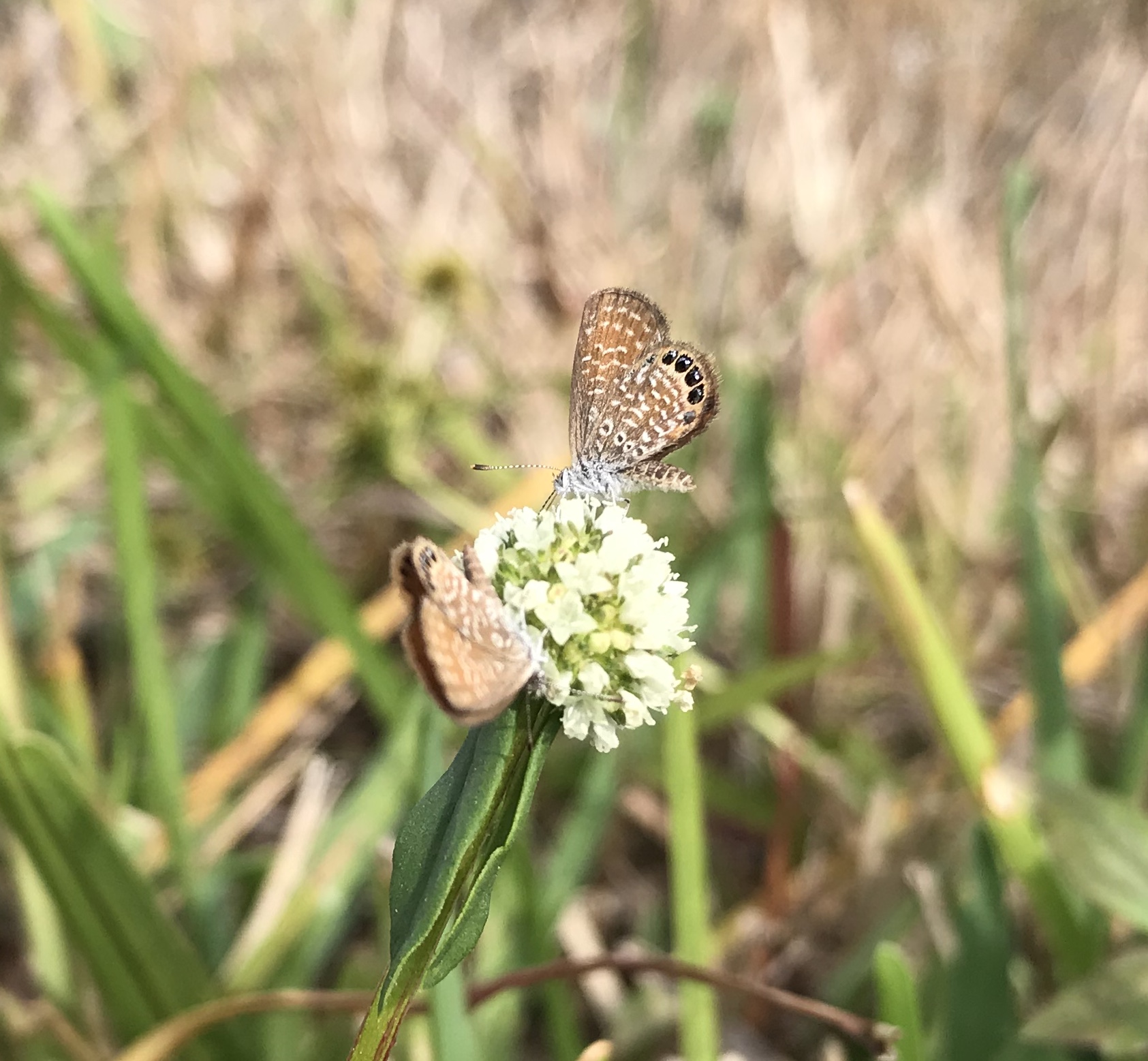
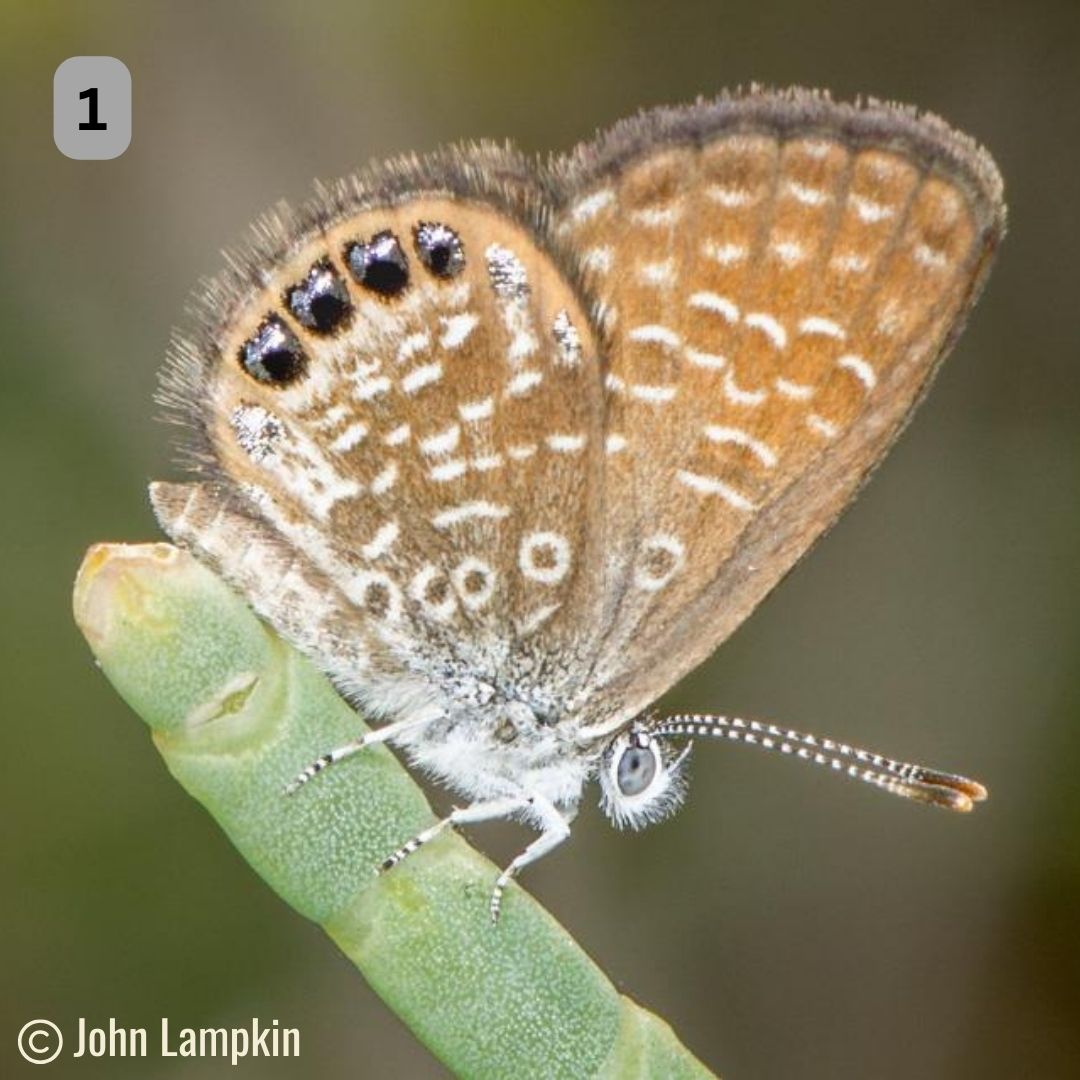
Eastern Pygmy-Blues are one of the tiniest butterflies in Florida. Indeed, with a wingspan that’s typically less than 7/8” and a dull grey-brown wing color, people frequently overlook this butterfly or mistake it for a moth. Take a closer look, however, and you’ll see clubs at the end of this butterfly’s antennae (moths tend to have feathery antennae) and four large black spots with an incredibly iridescent blue marking
at the outer edge of its hindwing. (See Photo #1.)
|
|
|
|
|
|
Eastern Pygmy-Blues are closely associated with coastal salt flats and tidal marshes where their host plants, Glassworts (Sarcocornia perennis and Salicornia bigelovii), are found. Females lay flat, whitish eggs on the plant’s stems; these stems are then eaten by the tiny green caterpillars that emerge. In his book, Florida Butterfly Caterpillars And Their Host Plants, Marc Minno reports that ants tend to the caterpillars in the Florida
Keys.
Adults typically nectar on either Saltwort (Batis maritima) or Palmetto Palms (Sabal spp.).
We used to see these butterflies regularly at Fort DeSoto Park but we haven’t seen them there recently.
|
|
|
|
Let us know if you happen upon any there or any other nearby place--please take a photo and email it to [email protected].
|
|
|
|
Glasswort - (Sarcocornia perennis)
|
|
|
|
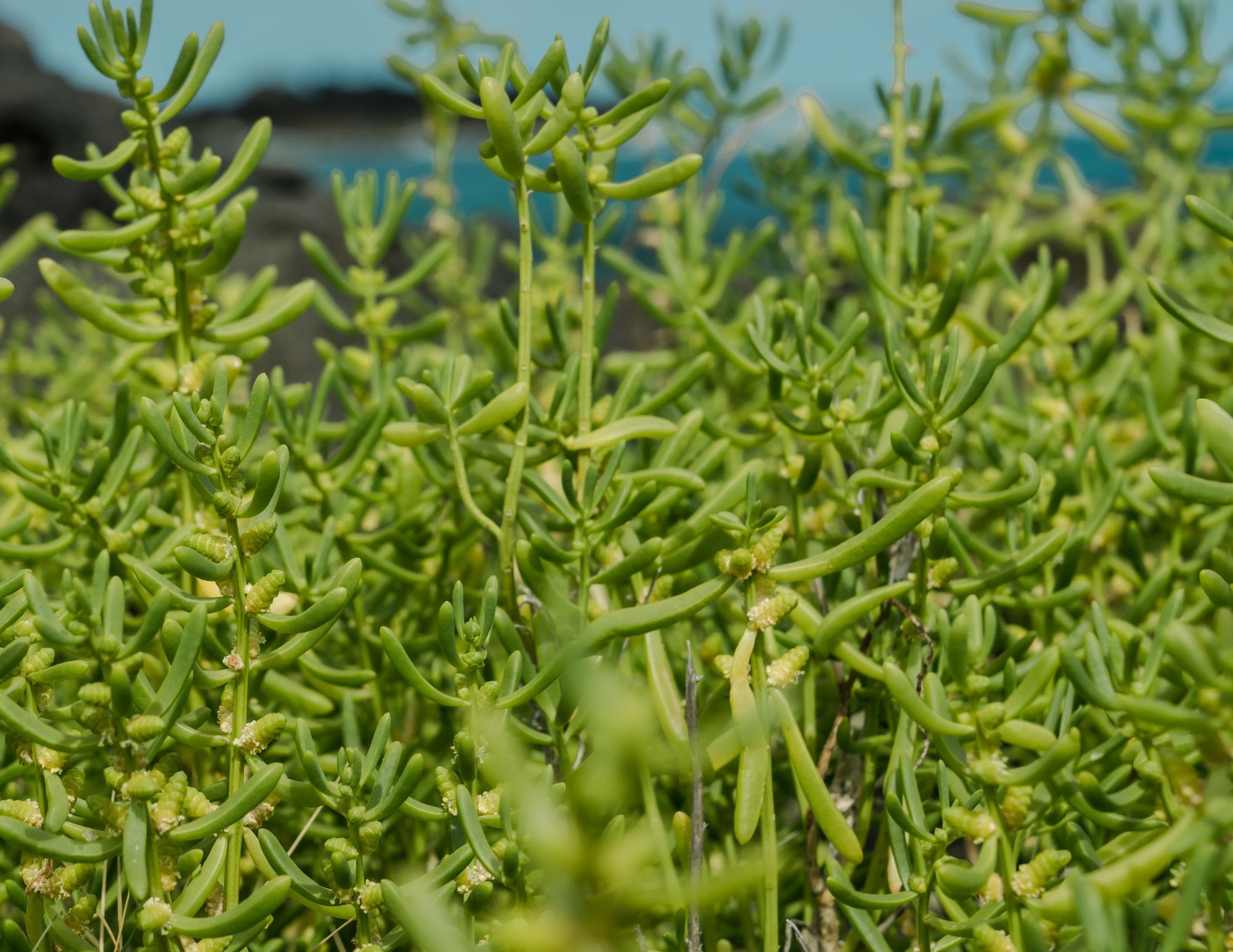
Glasswort (Sarcocornia perennis) is a small, creeping, highly branched shrub with a woody base and fleshy, highly jointed leaves that forms mats up to 3 feet in diameter. Typically found in coastal salt marshes, tidal mud flats and salt pans, in Florida, Glasswort is an obligate hydrophyte and also a halophyte. It can withstand high salt concentrations and prolonged flooding. It is the host plant for our butterfly of the
month, the Eastern Pygmy-Blue. There has been growing interest in cultivating this plant for commercial purposes, with European researchers examining its potential as a salt substitute in snacks. (See this article.) Other research has focused on the plant’s health benefits; European scientists found that Glasswort contained more potassium than spinach and certain polyphenoloic compounds (secondary metabolites that are potentially associated with health benefits). Glassworts are common in certain Asian cuisines, where the plant is used as an herb. While it’s unlikely that many of our customers have the right environment to grow Glasswort in their gardens, we’ve heard that some people are beginning to grow it hydroponically. Are you someone who likes to experiment with new plants and methods of growing them? If so, please let us know how it goes. Email your results to us at [email protected] and share your knowledge.
|
|
|
|
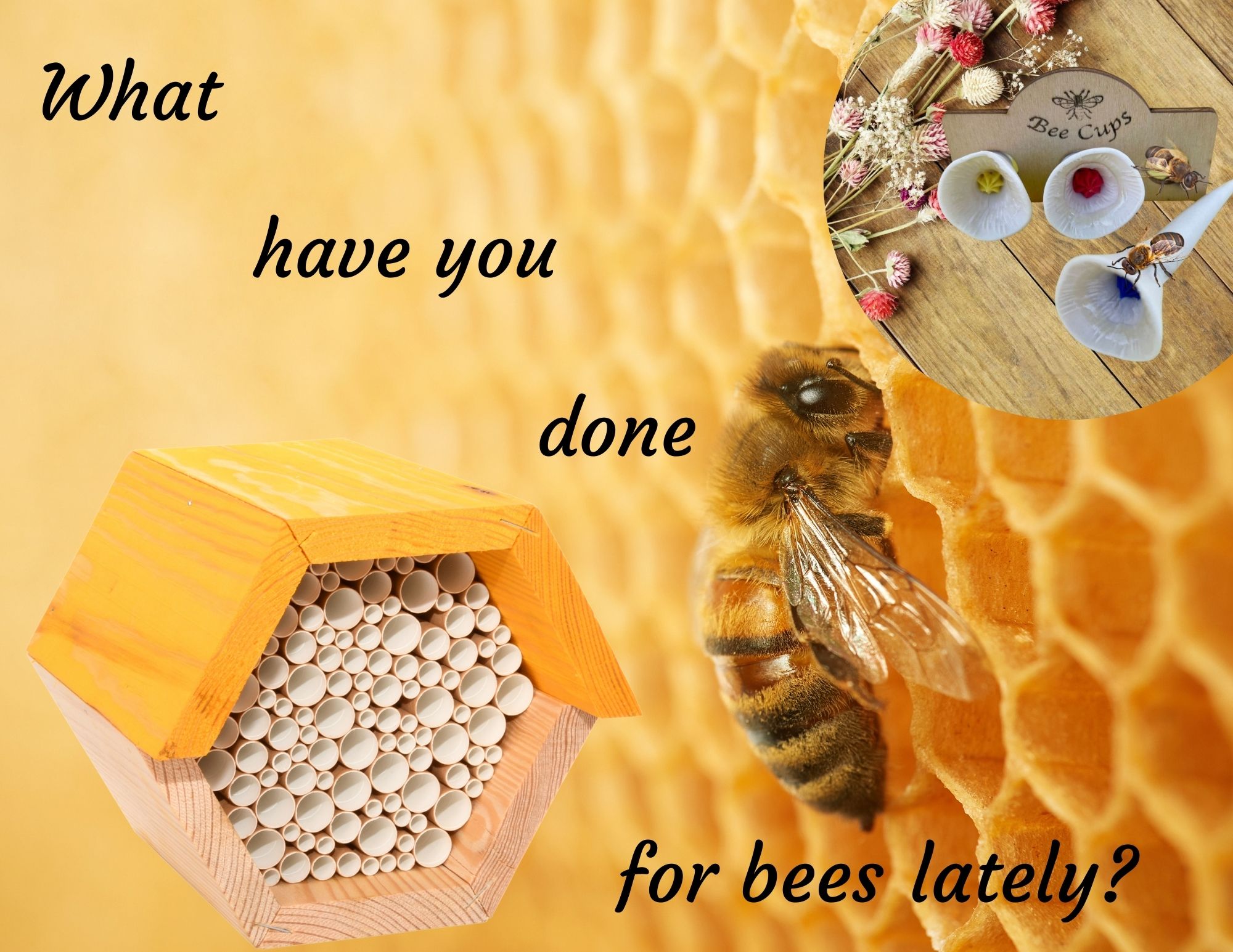
Let's celebrate the bees this month! August 17 is National Honey Bee Day which is an annual celebration that honors the incredible honey bee and its contributions to our environment and agriculture. This special day brings attention to the importance of honey bees and promotes their conservation. Come find out what all the buzz is all about at Little Red Wagon's Gift Shop. We have a variety of bee-utiful merchandise
to support these perfect pollinators or adorn your home and garden!
|
|
|
|
|
|
How sweet it is! Enjoy pure, raw and unfiltered honey from Tampa Bay beekeepers. Purchase gallberry, orange blossom and wildflower honey produced by the happiest bees in the Tampa Bay area!
|
|
|
|
Nectar Plant of the Month
|
|
|
|
Saltwort (Batis maritima)
|
Saltwort (Batis maritima) is a sprawling, leggy perennial shrub that typically grows to about 4-feet tall and at least that wide. It is an obligate hydrophyte and also a halophyte; as such Saltwort is almost always found in wetlands/tidal marshes near the coast and will form dense colonies in salt marshes, brackish marshes, mangrove swamps, mud flats, and saltpans. It can withstand tidal inundation and is considered a pioneer
plant that will quickly populate coastal vegetative zones damaged by hurricanes. Saltwort has tiny white flowers that serve as a nectar source for Eastern Pygmy-Blues. It is also one of the caterpillar host plants for the Great Southern White. Additionally, according to iNaturalist, Saltwort can be eaten in salads, popped like popcorn, or used as an herb for pickling. Saltwort grows best in full sun and wet, sandy soil. It is a tough plant and can be used to control erosion in coastal areas. Plants are wind pollinated. Saltwort can be found at Marina Bay Drive in Tampa, Fort De Soto Park, Greater Pinellas Point, the Skyway Trail in St. Petersburg, and many other places in our area. Let us know where you’re seeing it. Email the information to us at [email protected].
|
|
|
|
American Wisteria - (Wisteria frutescens)
|
|
|
|
American Wisteria (Wisteria frutescens) is a woody, deciduous perennial counterclockwise twining vine that is a southern favorite valued for its 18-inch-long racemes of fragrant, purple flowers. Easily growing to 40 feet or more and up to 8 feet wide, the plant was traditionally trained to climb porches and other strong, permanent structures near southern houses to provide relief from the sun. American Wisteria is commonly found in moist upland thickets, swampy woods, gum swamps, pond peripheries, stream borders and floodplains and is native from Virginia south to northern Florida and west to Illinois and Texas. The plant grows best in slightly acidic, humus-rich, moderately fertile, moist, well-drained soils. In areas north of us, the plant requires full sun for best blooms but in our area, the plant will perform better
when shielded from direct afternoon sun. Peak flowering season occurs in the spring. Bees and butterflies are both attracted to the plant and when visiting, bees may disappear into the deep flower to gather pollen and nectar. The plant is also the caterpillar host for Silver-spotted Skipper and Long-tailed Skipper. The plant should be pruned once or twice a year to control growth and to encourage flowering. Pruning can even shape Wisteria so looks like a weeping shrub. It makes a great specimen or, when allowed to reach its full width and height, a great backdrop or screen.
Please note: Wisteria’s seeds contain Saponin which is toxic to humans, cats, dogs, and horses. Plant in areas your pets and children can’t reach to minimize poison risks.
|
|
|
|
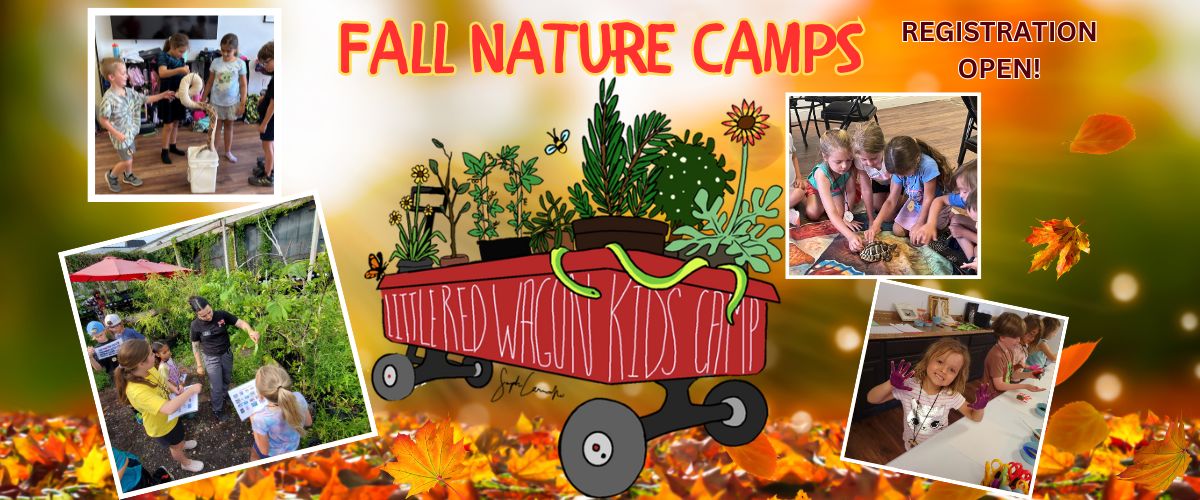
As the kids head back to school this month, now's the time to ensure you have awesome activities planned on non-student days. Our Fall Nature Camps are a great way for Kindergarten to Grade 5 students to explore and discover nature in a fun, safe environment.
|
|
|
|
Go on a butterfly count! Take a piece of paper with you on your next nature walk. During this walk, draw or record the different butterflies you see and tally them up when you see more than one. At the end, see what butterfly is most prominent in your area.
|
|
|
|
|
|
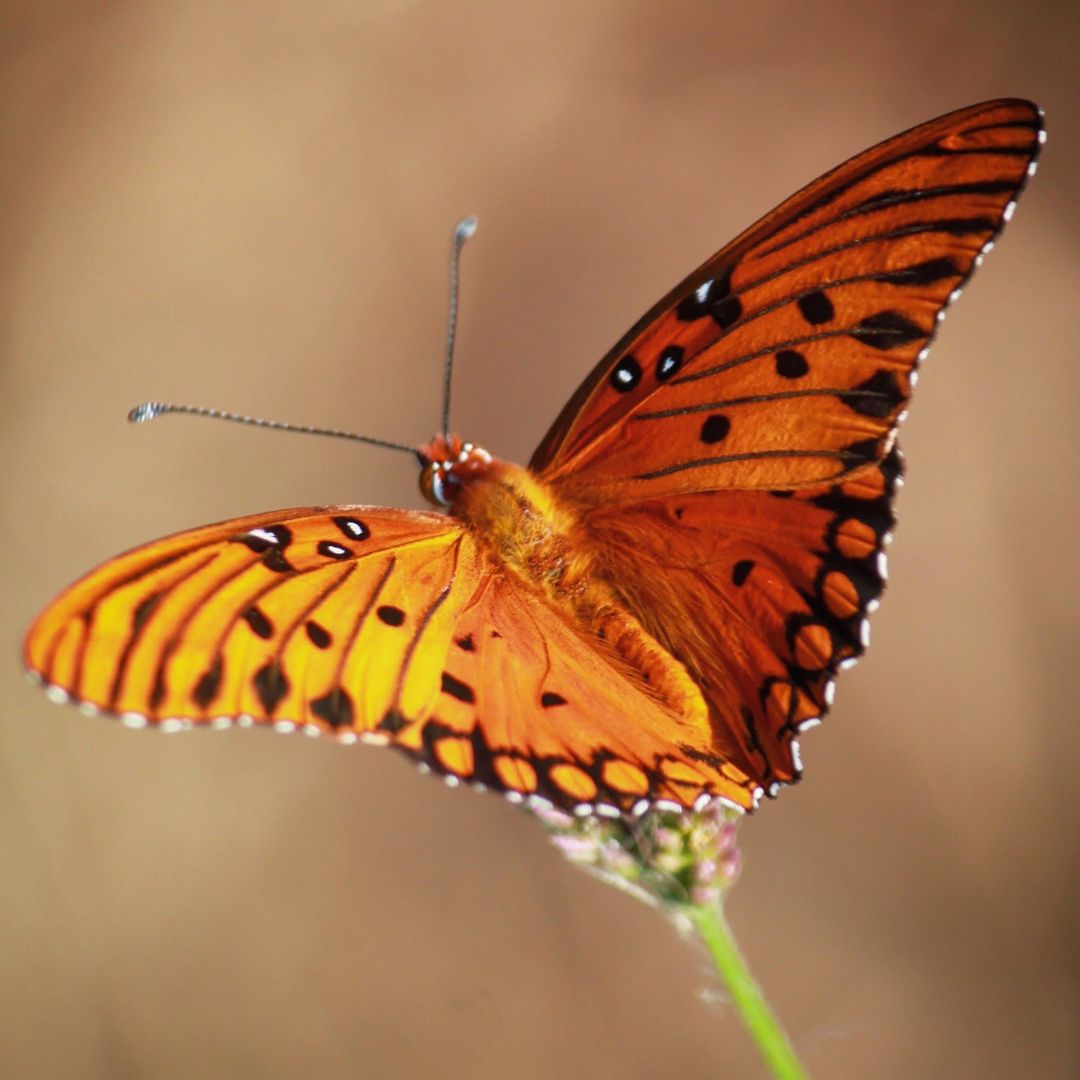
You will see even more Gulf fritillaries soon! Like the Monarch, the Gulf Fritillary has its own migration. During the summer they fly north towards the central United States. In the Fall, they will be flying south towards Florida!
|
|
|
|
|
|
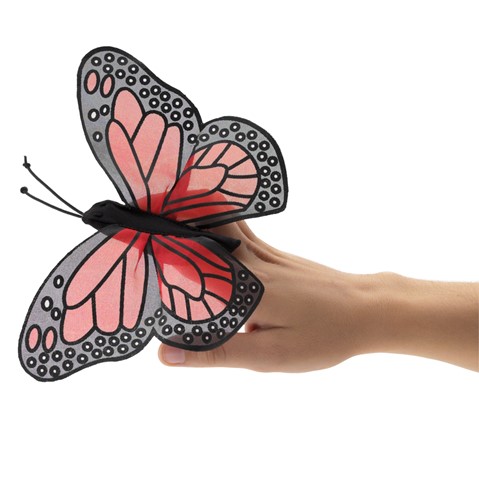
BUTTERFLY FINGER PUPPET
With a soft printed fabric design, the extraordinary and realistic detailing of the Folkmanis® finger puppets will surely pollinate the imagination and nurture sweet acts of conservation.
|
|
|
|
“Diggin’ in to Restore Butterfly Habitat in Tampa Bay”
|
|
|
|
Tampa Bay Butterfly Foundation regularly has a number of ongoing monthly volunteering opportunities.
|
|
|
|
|
|
|
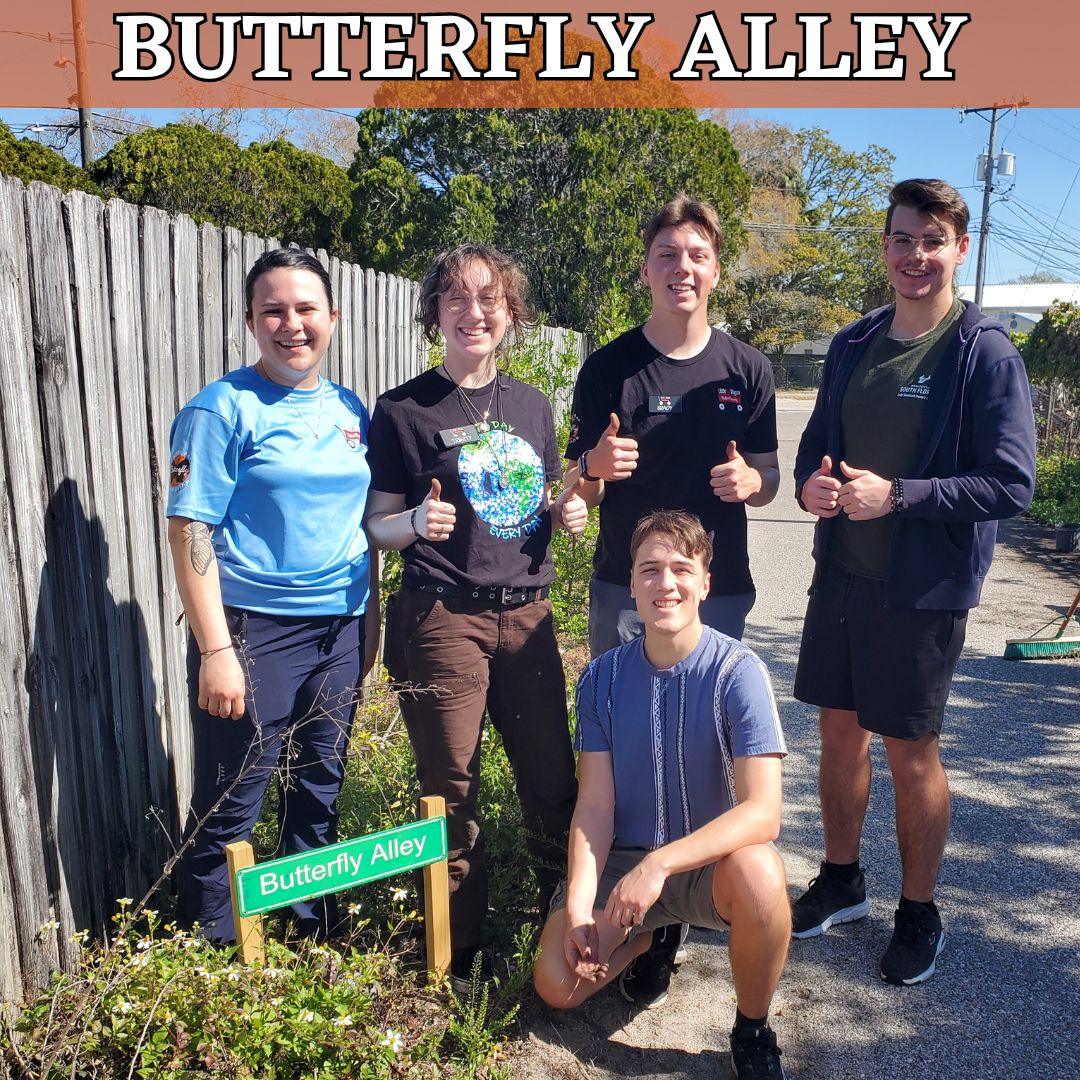
Butterfly Alley Maintenance
|
Volunteers perform cleanup and maintenance of Butterfly Alley habitat (4110 W. Estrella St., behind Little Red Wagon Native Nursery). We will not be performing maintenance during the summer months, but please join us when we resume in the fall.
|
|
|
|
|
|
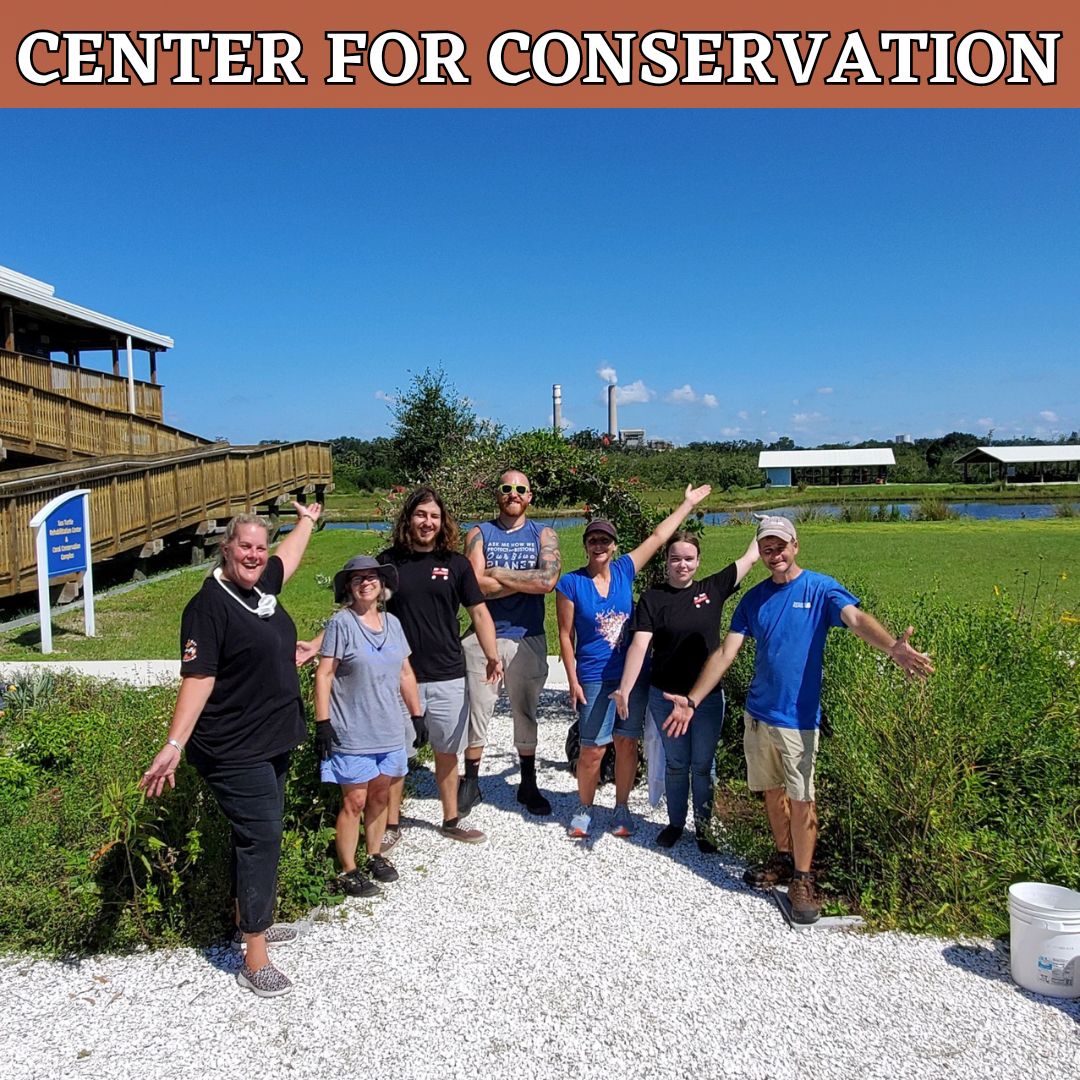
The Florida Aquarium, Tampa Bay Butterfly Foundation and FWC's Suncoast Youth Conservation Center need volunteers to assist with habitat maintenance at Center for Conservation site of the Florida Conservation and Technology Center in Apollo Beach (529 Estuary Shore Lane) as well as their Adopt a Road site along Dickman Road.
|
|
|
|
|
|
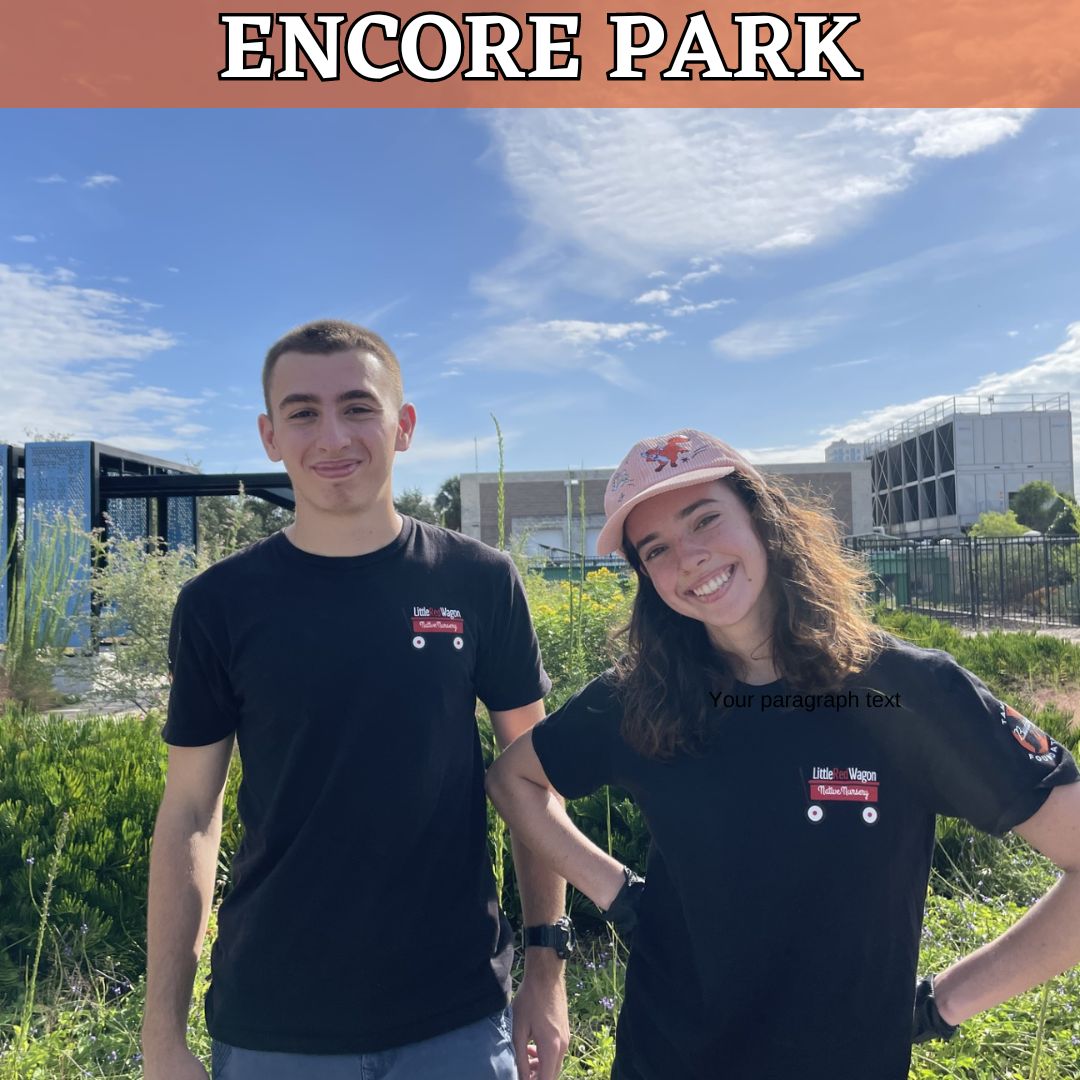
Volunteers help to maintain a Tampa Bay Butterfly Foundation-sponsored butterfly garden at Encore Park located at 1210 E. Harrison St. (Corner of Harrison St. and Hank Ballard St.). We will not be performing maintenance during the summer months, but please join us when we resume in the fall.
|
|
|
|
|
|
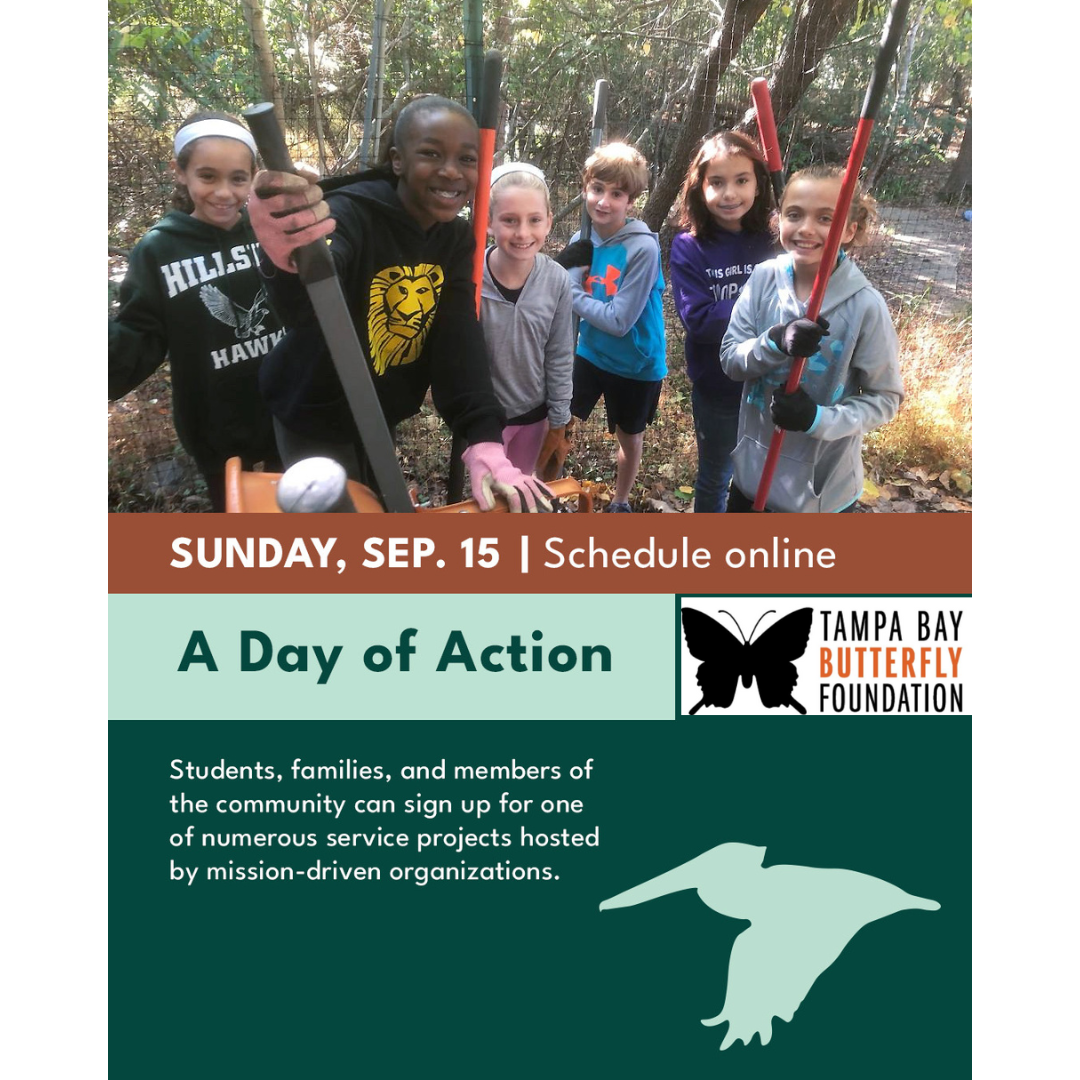
We’re proud to partner with @rootsandshoots and the Tampa Bay Roots & Shoots Alliance. Please join us September 15 for butterfly garden maintenance at Little Red Wagon Native Nursery - Native Butterfly Botanical Garden and Butterfly Alley located at 4113 Henderson Blvd. Tampa, FL 33629. Come help improve the natural environment.
|
|
|
|
|
|
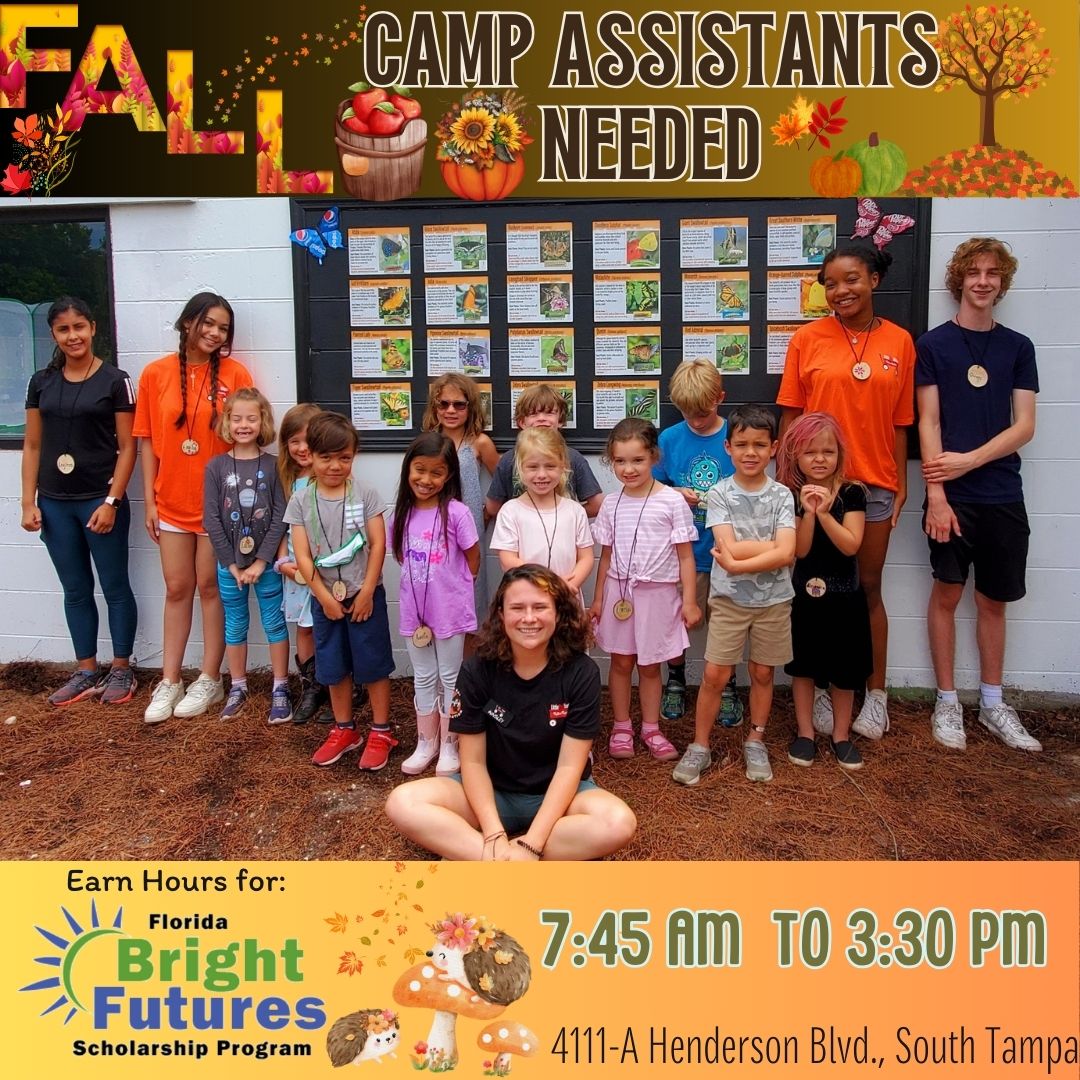
Sign up for a rewarding experience mentoring Kindergarten to Grade 5 children during our Nature Camps this fall. This is a great opportunity for college environmental science students and for High School students to earn hours for the Florida Bright Futures Scholarship program.
|
|
|
|
|
|
Little Red Wagon Native Nursery
We currently need garden enthusiasts to help us support the efforts of Tampa Bay Butterfly Foundation’s conservation, restoration, research, and education efforts.
|
|
|
|
ABOUT THE TAMPA BAY BUTTERFLY FOUNDATION: With a focus on Florida butterfly species and native plants, environmental education and local awareness in the Tampa Bay area, Tampa Bay Butterfly Foundation was established to support the conservation of butterflies and pollinators and the restoration of their natural wildlife habitats. By working globally with university research partners, providing educational and research opportunities and community outreach programs, and through multi-faceted fundraising efforts,
the Foundation aims to elevate public awareness of the importance of butterflies.
The Tampa Bay Butterfly Foundation Inc., a 501(c)(3), is an affiliate of the Butterfly Conservatory of Tampa Bay.
|
|
|
|
The metamorphosis of Butterfly Tampa is complete! The grand
opening of our new Botanical Native Butterfly Gardens and living exhibits was held on August 2. Butterfly Tampa emerged as a unique, memorable, and educational attraction for all ages attached to the Little Red Wagon Native Nursery. Attendees can view our living exhibits that include many native and some exotic reptiles, amphibians, and arachnids. We also unveiled our new “bug bungalow” featuring many of our vital native insects. You can view caterpillars eating their host plants and look
at our fantastic butterfly collection in the educational facility. On your way to our demonstration botanical garden, showcasing our native Florida flora, you will see our new butterfly emergence lab and may have the chance to see a butterfly emerge from its chrysalis or a moth emerge from its cocoon. As you stroll through a tranquil oasis tucked behind our South Tampa native nursery, you can enjoy our new native butterfly botanical garden with butterflies in their native habitat free flying
around you. We have had over 30 different species of butterflies regularly visiting our gardens and you never know which will visit on any given day. Get inspired and join us on the quest to re-wild Tampa Bay and beyond! Learn how to do your part to support the conservation of wild butterfly populations and their
natural habitats together through chemical-free native plant landscaping. Our new attraction will give you the chance to explore our exhibits, read the educational signage, learn from our knowledgeable nature interpreters, and connect with other amazing folks just like yourself.
NEW HOURS:
Monday through Saturday Plant and Gift shop open 9am – 5:30pm
(Living exhibits and butterfly garden open 9:30am – 5:00pm and last admission at 4:30pm)
Sunday Plant and Gift shop open 10:00am - 5:30pm
(Living exhibits and butterfly garden open 10:30am – 5:00pm and last admission at 4:00pm)
Annual
memberships are now available for purchase. Membership opens the door to numerous perks, including discounts to the gift shop and plant shop, exclusive early access to sign up for presentations, events, camps, and more. By subscribing
now, you'll stay informed and be ready to explore all the exclusive content and features we have in store for you.
|
|
|
|
|
|
BUTTERFLY
RELEASES
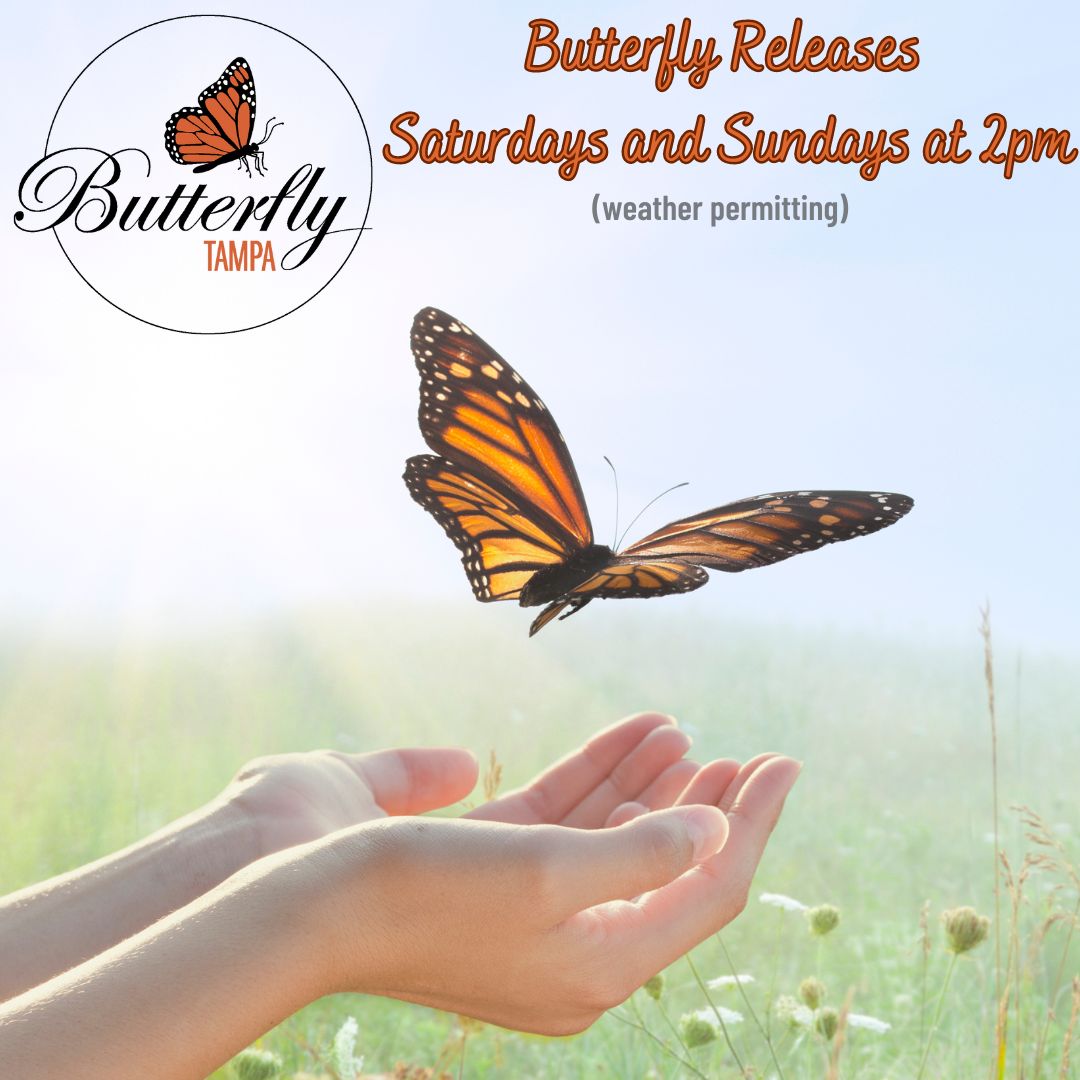
Butterfly releases will be held Saturdays and Sundays at 2pm (weather permitting) included in paid single day ticket purchases and memberships. Skilled nature interpreters and horticulture specialists will be available to answer questions and provide visitors with a personal and highly engaging experience.
|
|
|
|
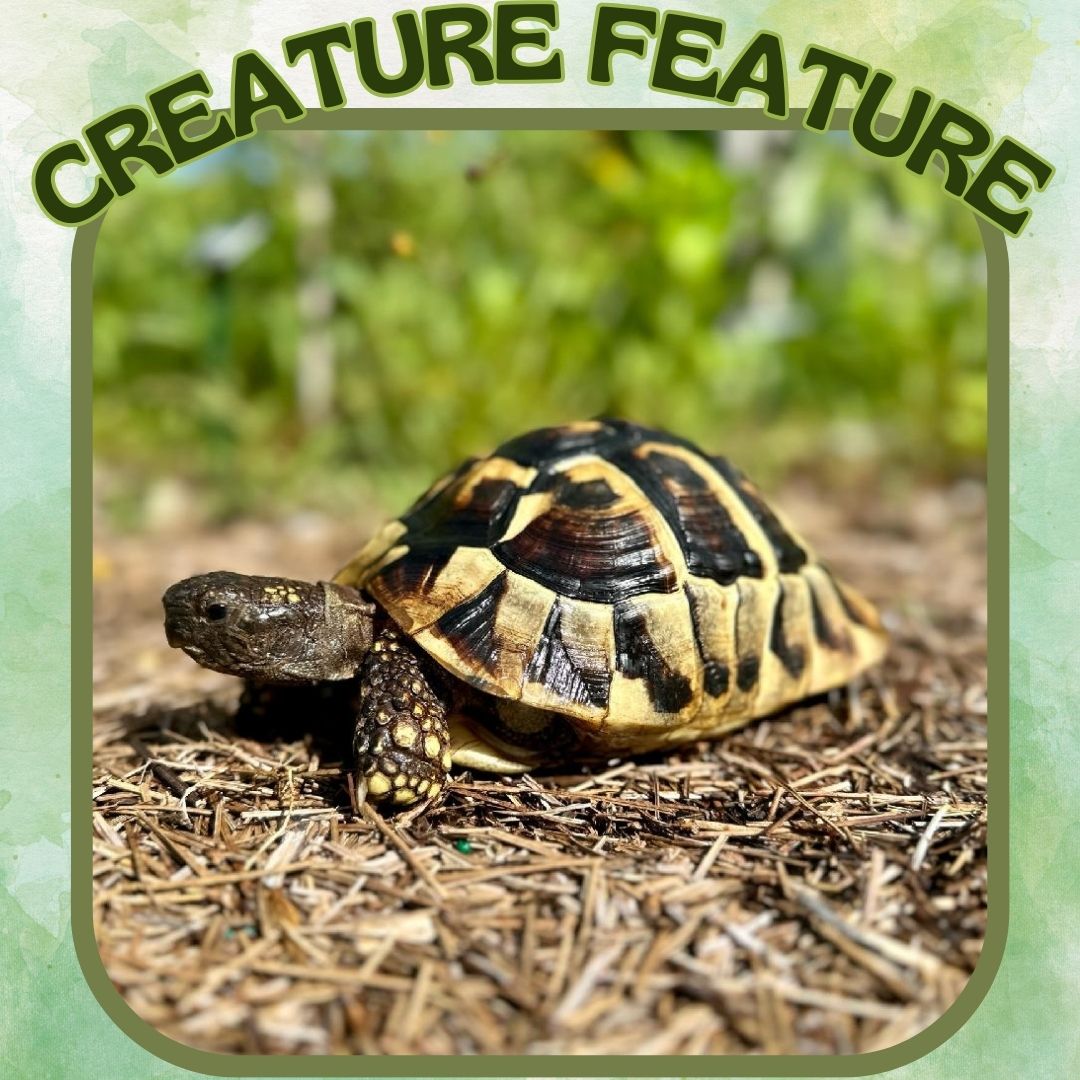
Reptile of the Month: Shelly
|
|
|
|
|
|
Meet Shelly, our charming Hermann's tortoise (Testudo hermanni) and this month's featured reptile at the Little Red Wagon Native Nursery and Tampa Bay Butterfly Foundation! Native to southern Europe, Hermann's tortoises are known for their distinctive shell patterns and gentle nature. Here, Shelly is a favorite among our Butterfly Summer Campers!
Shelly, like other Hermann’s tortoises, has a beautifully patterned, domed carapace (upper shell) with dark markings on a yellow or pale background.
|
|
|
|
Despite being small, Shelly displays a robust build and strong, clawed feet adapted for digging and traversing varied terrain. Adult Hermann's tortoises typically measure between 6 to 8 inches in length, with females often growing slightly larger than males.
Hermann's tortoises are from the Mediterranean, preferring open, grassy areas with scattered bushes and low-growing vegetation. They are herbivores, primarily feeding on a variety of plants, flowers, and occasionally fruits. In the wild, these tortoises play a crucial role in seed dispersal, contributing to the biodiversity of their habitats. Hermann's tortoises are known for their longevity, with some individuals living up to 50-100
years in captivity. While Hermann’s tortoises are not native to the USA, a relative, the gopher tortoise, is an imperiled keystone species found right here in Florida!
Hermann's tortoises face many threats in the wild, including habitat loss, climate change, and illegal collection, leading to their status of ‘Near Threatened’ on the IUCN’s Red List. Conservation efforts, including breeding programs and habitat protection, are crucial for ensuring the survival of these remarkable reptiles in their native ranges.
Visit us at the Little Red Wagon Native Nursery to meet Shelly and learn about our other reptilian residents!
|
|
|
|
Bug of the Month: Spotted Tailless Whip Scorpion
|
|
|
|
This month at the Little Red Wagon Native Nursery and Tampa Bay Butterfly Foundation, we are spotlighting one of Florida’s strangest looking creatures, the spotted tailless whip scorpion (Phrynus marginemaculatus). This is the only tailless whip scorpion species native to Florida and can also be found in Cuba, Hispaniola, and the Bahamas.
Despite what their name may suggest, tailless whip scorpions are not closely related to the true scorpions. Instead, they, along with the short-tailed whip scorpions and the true whip scorpions, make up the group Pedipalpi which are the closest living relatives of the spiders.
|
|
|
|
|
This can perhaps be seen best when comparing tailless whip scorpions to spiders in the suborder Mesothelae, which is the most ancient extant spider lineage and retains a segmented abdomen similar to that of the whip scorpions.
The spotted tailless whip scorpion, along with most other tailless whip scorpions, has an extremely unique body plan. They have eight legs like all arachnids. The front pair, however, are never used for walking. These “antenniform” legs have been heavily modified to fulfill a function similar to the antennae of crustaceans and insects. Tailless whip scorpions are nocturnal hunters, and so rely heavily on their senses of touch and smell for information
about the world around them. Tailless whip scorpions walk using their other six legs and can often be seen walking sideways like a crab.
Their bodies are flattened like a pancake, perfect for wedging under cracks. To the front of this arachnid's body are two massive claws, properly referred to as their pedipalps. They use these pedipalps to grab and kill their prey, which is usually insects and other arachnids. While they may look scary, these critters are harmless to humans. They are
neither venomous and not known to bite humans.
The spotted tailless whip scorpion, has a body length of less than an inch and leg span of around 4 inches. The males perform an extremely long and complex mating ritual in order to soothe the female and avoid being her next meal! After mating, the female will lay 12-20 eggs which will hatch in about three months' time. The female will carry the hatchlings on her back for the first few weeks of their lives.
The conservation status of this species is still poorly understood. If you see them in your garden, be sure to leave them be, as they can help remove unwanted pests from your yard. Next time you visit our exhibits, check out our Spotted tailless whip scorpion in our new Bug Bungalow exhibit!
|
|
|
|
Monthly Calendar of Events
|
|
|
|
AUGUST 2 Native Butterfly Botanical Garden Grand Opening AUGUST 4 National Tree Day AUGUST 9 National Passionfruit Day AUGUST 12 International Youth Day AUGUST 14 World Lizard Day 15 AUGUST 17 National Honey Bee Day, National Non-profit Day AUGUST 24 International Bat Night AUGUST 25 World Water Week (25-29) AUGUST 29 Little Red Wagon's Birthday
|
|
|
|
|
|
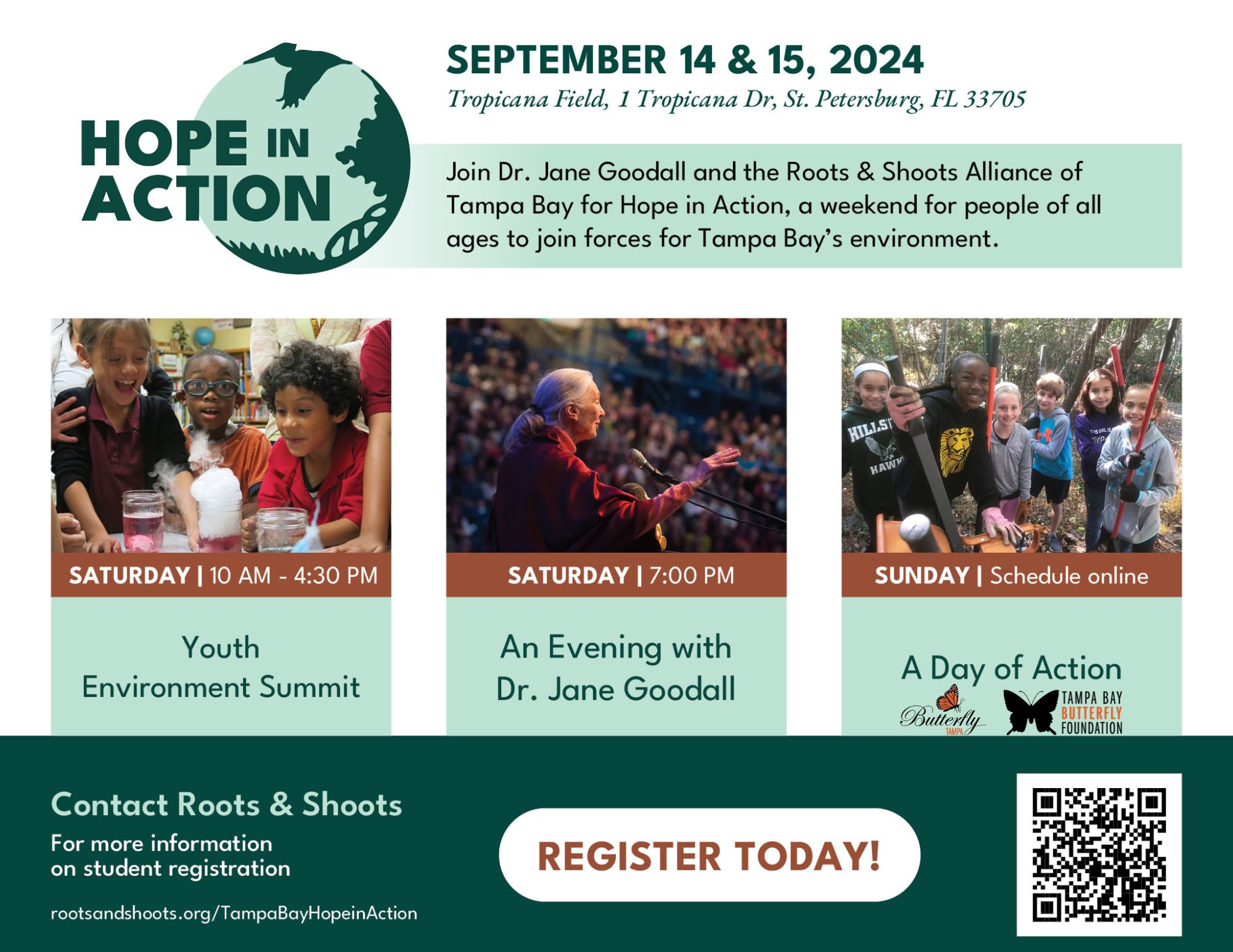
Join us for a weekend of Hope in Action!
We’re proud to
partner with @rootsandshoots and the Tampa Bay Roots & Shoots Alliance for a series of events that is sure to energize and inspire you.
It starts with
the Youth Environment Summit, September 14 at @Tropicana Field, followed by an evening with Jane Goodall, a true hero for the environment. Tickets on sale now!
|
|
|
|
Then, join us September 15 for butterfly garden maintenance at Little Red Wagon Native Nursery - Native Butterfly Botanical Garden and Butterfly Alley located at 4113 Henderson Blvd. Tampa, FL 33629. Come help improve the natural environment.
Learn more at rootsandshoots.org/TampaBayHopeinAction.
|
|
|
|
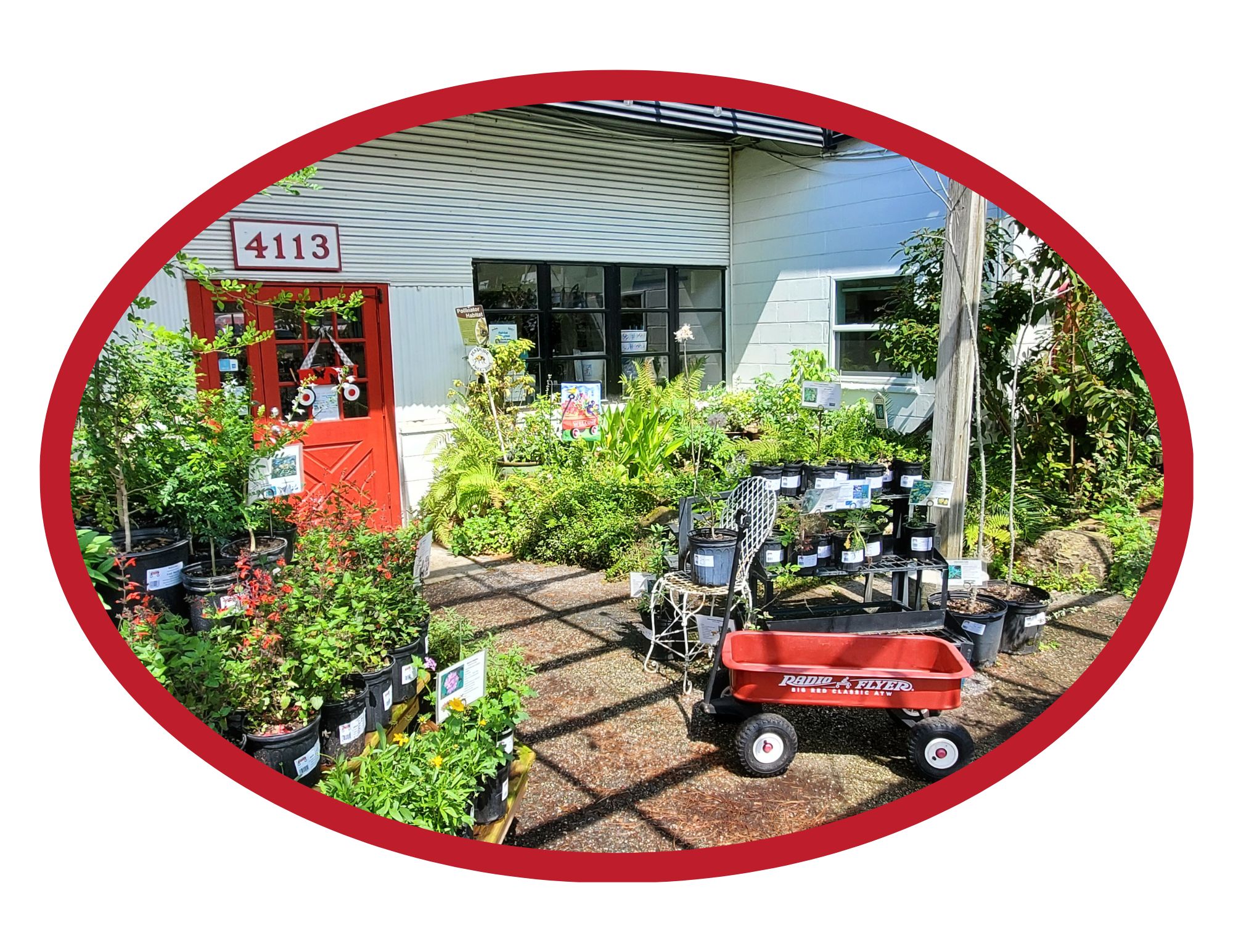
Little Red Wagon Native Nursery is Tampa’s only native nursery. Supporting Florida’s native plant & wildlife ecosystem and our natural world, we are located at 4113 Henderson Blvd. in South Tampa.
You can also visit us at LittleRedWagonNativeNursery.com Email: [email protected] Hours: Mondays: 11-3, Tuesdays - Fridays 11-5:30, Saturdays 10-5:30, Sundays 12-4
|
|
|
|
|
|
|
|